
A decade ago, fashion companies relied on TV commercials, magazine advertising, and celebrity endorsements to draw in customers. Today, all that has changed. Instagram, YouTube, and TikTok are where consumers spend more time than fashion magazines.
This means that brands are investing more of their marketing budgets in influencers who are already trusted and have the attention of their target audience.
If a fashion influencer shares an outfit suggestion, followers usually do not consider it an ad but rather a genuine recommendation. There are many reasons why influencer marketing has become one of the best ways to promote brands, big or small, in the fashion market.
From local fashion brands to global giants, influencers can be a powerful tool for reaching audiences in a more authentic and relatable manner. If you’re looking to connect with the right creators for your brand, check out our guide at TheJaipurHubz on fashion influencers in Jaipur who are already making an impact in the local market.
Why Is Traditional Fashion Advertising Losing Its Impact?
Traditional advertising is still important, but no longer has the same impact on purchasing decisions. Today’s consumers are inundated with thousands of ads a day. Many people have learned to ignore them completely.
This is where influencers come in, as they communicate with audiences in a more personal way. They don’t display a perfectly done ad, but instead they show real-life experiences, styling ideas, outfit reviews, and honest opinions.
Consumers are more likely to trust influencers’ recommendations because they feel like they know the creator personally.
An example is if a fashion influencer wears a specific jacket many times during the winter, they begin to view it as a useful product rather than just an advertisement.
How Do Fashion Brands Use Influencers to Increase Brand Awareness?
There’s nothing quite as influential as having lots of people know about your brand. One of the main reasons behind the collaboration between brands and influencers is visibility.
The best collection of fashion designs can’t turn into sales if people are unaware of it.
Suppose the new fashion company for women has just launched a summer collection of women’s clothes. The brand may offer great designs, competitive pricing, and high-quality fabrics, but without reaching the right audience, attracting customers becomes difficult.
The brand can reach thousands of possible customers in a matter of minutes by working with a few fashion bloggers. Each reel, story, and post is an introduction to a whole other stream of users.
This allows brands to connect with their audience far more quickly than they would by relying on organic social media growth alone.
Example of Brand Awareness Through Influencers
Let’s say a fashion creator has 50,000 followers and releases a reel featuring 5 looks from a new fashion line.
If the content receives positive engagement, there is a possibility that thousands of people could visit the brand’s profile or website in just a few days.
They end up becoming familiar with the brand even if they don’t buy it the first time, so future marketing will be more effective.
How Do Influencers Build Trust and Credibility?
Trust is one of the major hurdles for fashion brands, particularly for newer fashion brands. When it comes to buying, consumers often avoid buying from unfamiliar brands because they are unable to check the products they are interested in before purchase.
Influencers help in lowering this uncertainty.
Creators share their own experiences with clothing quality, comfort of fabric, sizing, and overall fit, and answer the questions customers may already have.
Influencer advertising is not like the standard advertisement that you might see on TV, and it is likely to feature products in real-life scenarios. This helps customers better understand the actual fit, size, and appearance of the clothing.
When trusted creators keep recommending a brand over time, it can definitely increase the credibility of the brand.
The different types of influencers that fashion brands work with
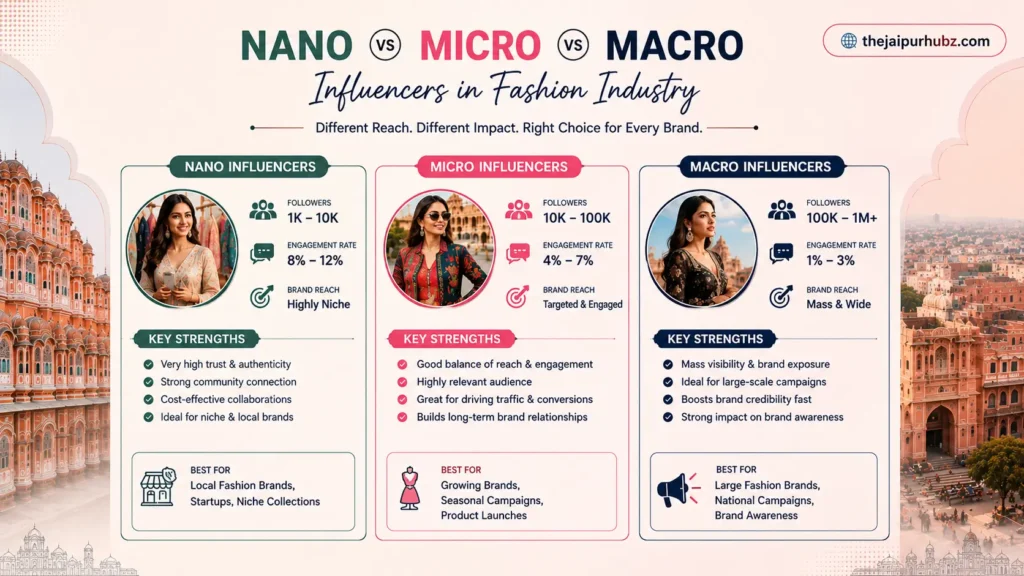
A large number of people think that brands only work with creators with hundreds of thousands of followers. As a matter of fact, fashion brands work with influencers of all sizes.
Nano Influencers
Nano influencers typically have anywhere from 1,000 to 10,000 followers. They have very loyal audiences as they have the ability to build a close relationship with them.
These creators are particularly beneficial for niche brands and fashion companies looking to get genuine recommendations.
Micro Influencers
Micro influencers generally have anywhere from 10,000 to 100,000 followers. They are considered one of the most effective influencer categories because they offer a strong balance between reach and engagement for fashion marketing.
In fact, many fashion brands opt for using several micro-influencers instead of investing in one celebrity creator.
Macro Influencers and Celebrities
For the large brands, it is not unusual to work with influencers that boast hundreds of thousands of followers, or even millions. These collaborations can bring in a ton of exposure over a short time span.
They often need a much bigger budget, though, and often have lower engagement rates than smaller creators.
How Do Fashion Brands Turn Influencer Content into Sales?
Though brand awareness is crucial, most businesses are looking for sales in the end.
Fashion brands can provide influencers with customized discount codes and affiliate links. This will enable companies to track exactly how many sales are generated from every creator.
For instance, a creator can post a discount code, like “STYLE10”, which allows followers to receive a 10% discount on their purchase.
That code enables the brand to know exactly how successful the campaign was when the customer uses it.
This tracking system allows businesses to determine the ones that provide the best ROI and which partnerships should be kept going in the future.
A Real World Case Study of an Influencer Marketing Campaign
Daniel Wellington is one brand that’s famous for its brilliant strategy in influencer marketing. The watch brand decided to go with the modern approach by using social media for its marketing rather than spending money on traditional marketing methods such as billboards or television advertisements.
The company sent free watches to creators and provided them with special discount codes for sharing with their followers. In return, influencers shared images and videos of themselves wearing the watches, helping people see what the watches looked like in real-life situations.
The content was so natural that it didn’t look like a sales campaign.
As a result, more people found out about Daniel Wellington after influencer posts, and the company received a lot more attention and sales.
This made the brand a huge success on social media.
It is still regarded as a great example of how influencer marketing can help brands build authentic connections with customers.
How to Approach a Fashion Influencer Professionally
Influencer outreach remains a challenge for many brands. One of the biggest mistakes brands make is sending copy-and-paste messages.
Influencers get a lot of requests for collaboration every day. To stand out, brands need to make their communication more personal.
1. Research Before Contacting
Take the time to check out the influencer’s content before contacting them. Understand their audience, engagement level, and the style of their content.
A content creator who routinely shares budget fashion advice isn’t going to work for a high-end clothing line.
2. Personalize Your Message
Mention specific content that the influencer has produced, rather than sending a generic good morning. Avoid sending a generic collaboration; instead, mention specific content that the influencer created.
For example:
Hi Sarah,
We’ve seen your summer styling series and really enjoyed your practical and easy-to-follow fashion advice.
We think our new collection would certainly fit in with your target customer, and we’d be delighted to chat about a collaboration.
This looks more authentic and credible right off the bat.
3. Offer clear details on the campaign
Brands that get straight to the point are well-liked by influencers.
Include information about:
- Campaign objectives
- Deliverables
- Payment structure
- Deadlines
- Product details
When both parties are aware of the expectations, it leads to a more productive working relationship.
You can also check our article on how to find fashion influencers for influencer marketing.
Why Do Long-Term Influencer Relationships Deliver Better Results?
There are fashion brands that make the mistake of only going for one-time collaborations. But long-term relationships can yield more success.
When followers see a brand repeatedly over time, it makes the recommendation more authentic.
The brand is viewed as a natural part of the influencer’s lifestyle rather than a paid promotion. This consistency will build trust and ensure repeat sales.
This is why many effective fashion companies have now started investing in the ambassador program instead of running campaigns individually.
Conclusion
People tend to trust people more than advertisements, which is why fashion brands use influencers. Influencers can assist a business in gaining visibility, credibility, engagement, and sales that feel natural and relatable. The most effective campaigns are developed through a true partnership, clear communications, and an understanding of the target audience.
Fashion brands will continue to use influencer marketing as one of the most effective ways to grow and engage with their customers, as social media is influencing purchase decisions.