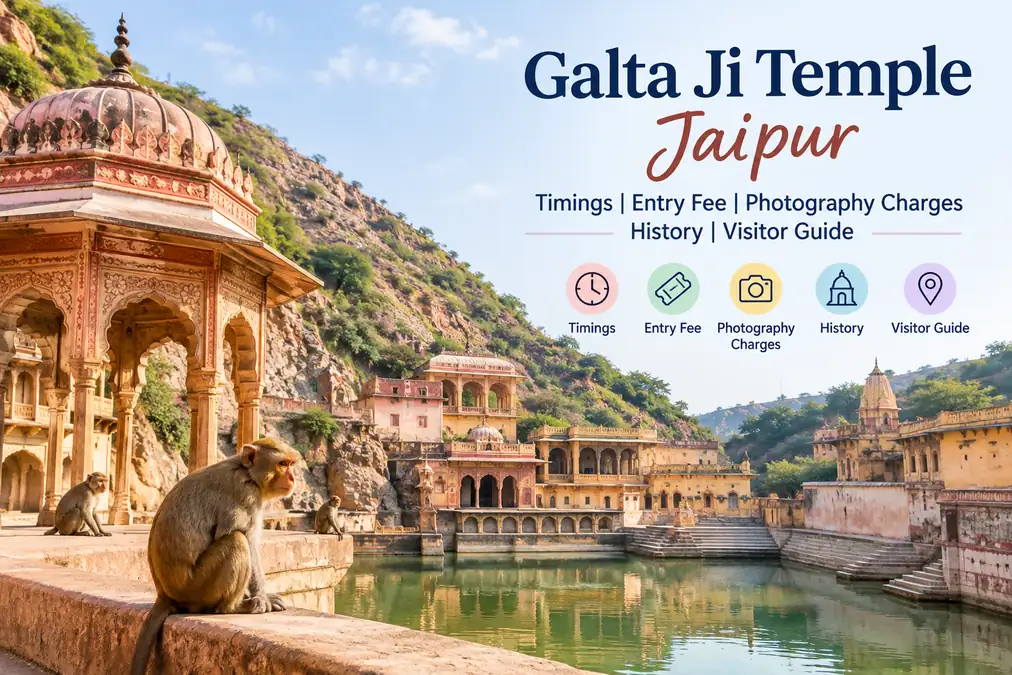

Galta Ji Temple in Jaipur is a historic Hindu pilgrimage site known for its sacred water tanks, pink sandstone buildings, natural springs, and monkeys. It is also called the Monkey Temple because monkeys are commonly seen throughout the complex.
Before visiting, check the timings carefully:
The schedule display on galtaji.org lists 6:00 AM to 9:00 PM from Monday to Thursday, 10:30 AM to 5:30 PM on Friday and Saturday, and Sunday is closed.
Its published charge chart lists free admission for Indian visitors, ₹100 for foreign nationals, and camera charges of ₹100 for Indians and ₹150 for foreign nationals.
Professional photoshoots and videography does not falls in the standard camera ticket and require permission.
This guide covers the temple’s timings, entry fees, photography rules, history, architecture, nearby attractions, and practical visiting tips so you can plan your trip with confidence.
Galta Ji Temple Jaipur: Quick Information
| Detail | Information |
| Temple name | Galta Ji Temple |
| Popular name | Monkey Temple |
| Location | Galta Ji, Jaipur, Rajasthan |
| Monday–Thursday timings | 6:00 AM–9:00 PM |
| Friday timings | 10:30 AM–5:30 PM |
| Saturday timings | 10:30 AM–5:30 PM |
| Sunday | Listed as closed |
| Indian admission fee | Free |
| Foreign national admission fee | ₹100 |
| Camera charge for Indians | ₹100 |
| Camera charge for foreign nationals | ₹150 |
| Professional photography | Permission required |
| Main attractions | Sacred kunds, shrines, sandstone architecture, and monkeys |
| Best season | October to March |
| Suggested visit duration | Around 2–3 hours, depending on your plans |
The timings and charges above follow the information displayed in the screenshots from the temple website. Confirm the current arrangements before travelling because other tourism websites publish different timings and camera fees.
Galta Ji Temple Timings
The timings displayed on the temple website vary by day. This is an important detail to check before planning your journey, particularly if you are travelling from another part of Jaipur.
| Day | Opening time | Closing time |
| Monday | 6:00 AM | 9:00 PM |
| Tuesday | 6:00 AM | 9:00 PM |
| Wednesday | 6:00 AM | 9:00 PM |
| Thursday | 6:00 AM | 9:00 PM |
| Friday | 10:30 AM | 5:30 PM |
| Saturday | 10:30 AM | 5:30 PM |
| Sunday | Closed | Closed |
These hours are based on the website screenshots you provided. Other sources, including Incredible India, show different general visiting hours. Check the temple’s current schedule before setting out, especially if you intend to visit on a Friday, Saturday, or Sunday.
What Is the Best Time to Visit?
October to March is generally a comfortable period for exploring the temple and surrounding hills. Early morning is a good choice on days when the complex is open because the weather is usually cooler and the light can bring out the details of the sandstone buildings.
If you want photography, allow enough time to explore the architecture without disturbing worshippers. For a visit to Surya Mandir, the hilltop Sun Temple, leave sufficient daylight for the uphill walk and return.
Galta Ji Temple Entry Fee in 2026
According to the admission and camera charge chart displayed on galtaji.org, admission charges differ for Indian and foreign visitors.
| Visitor category | Admission fee |
| Indian visitors | Free |
| Foreign nationals | ₹100 |
| Children below 12 years | Free admission is specified for foreign nationals. |
The chart states that children below 12 years are free for admission. It does not clearly establish whether a separate camera-fee exemption applies to children carrying cameras.
Admission and photography are separate matters. Indian visitors can enter without paying the listed admission fee, but a camera charge may apply if they bring equipment covered by the camera ticket.
Galta Ji Temple Photography Charges
Photography is an important consideration if you want to capture the temple’s architecture, sacred water tanks, and surrounding hills.
The temple website displays the following camera charges:
| Camera ticket | Indian visitors | Foreign nationals |
| Single cellphone or compact still camera | ₹100 | ₹150 |
The published chart specifies that the ticket covers a single cellphone or compact still camera without a tripod or other attachments.
These charges apply to the camera ticket described on the website. This is not giving you the permission for every type of photography.
Mobile Photography
The published camera chart includes a fee for a single cellphone. If you want to take ordinary travel pictures, check the applicable rules before starting.
Be respectful around worshippers, priests, and people bathing in the kunds. Ask permission before photographing individuals and follow any restrictions inside shrines.
DSLR and Other Camera Equipment
The published ticket specifically mentions a single cellphone or compact still camera without a tripod or other attachments. It does not clearly establish that every DSLR, multiple-camera setup, or equipment combination is covered.
If you plan to bring a DSLR, tripod, stabilizer, lighting equipment, or additional accessories, contact the temple authority beforehand. Ask whether your equipment is permitted and whether separate permission or charges apply.
Do not assume that paying the standard camera fee automatically allows you to use additional equipment.
Professional Photoshoots and Videography
The temple website states that video cameras, videography, and commercial or professional photoshoots are not allowed under the standard camera ticket. Permission for these activities rests with the Acharya Ji of Shri Galta Gaddi.
This matters if you are planning:
- A pre-wedding photoshoot
- A fashion or portfolio shoot
- A brand or promotional photoshoot
- Commercial photography
- A professional video shoot
Contact the temple authority before booking a photographer or making travel arrangements. Explain the type of shoot, the equipment you intend to use, and the number of people involved.
The published notice does not provide a fixed fee for professional photoshoots. Therefore, the ₹100 or ₹150 camera ticket should not be presented as the price of a professional shoot. Confirm any separate permission, conditions, or charges directly.
Penalty for Not Having the Required Ticket
The website’s published notice states that a penalty of ₹1,000 will be levied if a visitor is found without the required ticket or tickets.
Keep your ticket with you after payment. If you are unsure whether your phone, camera, or equipment requires a ticket, clarify the rule with temple staff before beginning photography.
You May Also Like: Shri Govind Dev Ji Temple Jaipur: Timings, History, Aarti, Parking and Visitor Guide (2026)
Other Possible Expenses at Galta Ji Temple
Your total spending depends on whether you are making a normal visit or bringing photographic equipment.
| Expense | What to expect |
| Admission for Indian visitors | Free, according to the published chart |
| Admission for foreign nationals | ₹100 |
| Camera ticket for Indians | ₹100 |
| Camera ticket for foreign nationals | ₹150 |
| Professional photoshoot | Permission and applicable charges must be confirmed. |
| Parking | Confirm the current local fee |
| Guide | Optional; agree on the price before starting |
| Transport | Depends on your starting point and vehicle |
| Food and refreshments | Depends on individual purchases |
The website’s displayed chart confirms admission and camera charges, but it does not give a parking tariff, guide fee, or fixed professional-shoot price. These expenses should not be added to a budget using guessed amounts.
Parking at Galta Ji Temple
If you are travelling to the Galta Ji Temple by car or two-wheeler, you can look for the open parking area just outside the temple entrance. A Google Maps review by Local Guide Anand Soni describes this parking space and reports a fee of ₹30 for up to two hours.
However, the review was posted three years ago. Therefore, treat the ₹30 amount as an older visitor-reported rate, not a confirmed current parking charge. Check the fee displayed at the entrance before leaving your vehicle, particularly if you plan to stay longer than two hours.
Photography is a separate expense. In the same review, the visitor reported paying ₹100 per cellphone for taking pictures at that time. This is also an older report, so check the temple’s displayed photography rules and current charges before taking photographs.
Parking location: Galta Ji Temple Parking on Google Maps
History of Galta Ji Temple, Jaipur
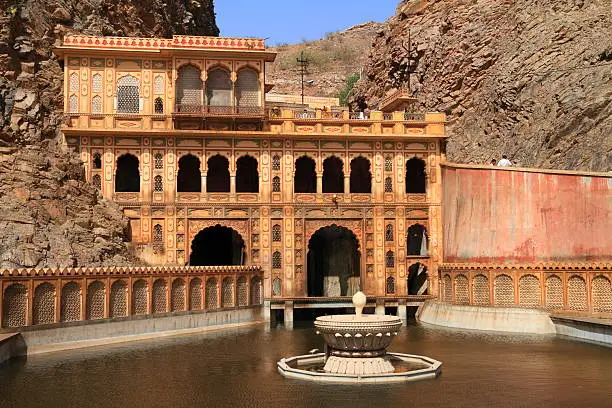
Galta Ji Temple is a historic religious site located in a valley surrounded by the Aravalli hills. Its history is closely connected with Saint Galav, who is believed to have meditated here and performed penance. According to local religious tradition, his devotion made the area an important place of worship.
The complex is also associated with the Ramanandi tradition, a Vaishnava religious tradition devoted to Lord Rama and other forms of Lord Vishnu. Saint Payohari Krishnadas is traditionally linked with the development of the Galta religious seat.
Much of the temple architecture visible today is associated with the 18th century. Diwan Rao Kriparam, a courtier of Jaipur’s ruler Sawai Jai Singh II, is credited with developing the complex. Royal patronage helped shape the buildings, courtyards, and decorative features that visitors see today.
The natural spring and sacred water tanks have also played an important role in the temple’s religious identity. Galta Kund is particularly revered, and pilgrims visit the complex for prayers and ritual bathing. During festivals such as Makar Sankranti, the site can attract large numbers of devotees.
Today, Galta Ji remains both a place of worship and an attraction for visitors interested in Jaipur’s history, religious traditions, and architecture.
Architecture of Galta Ji Temple
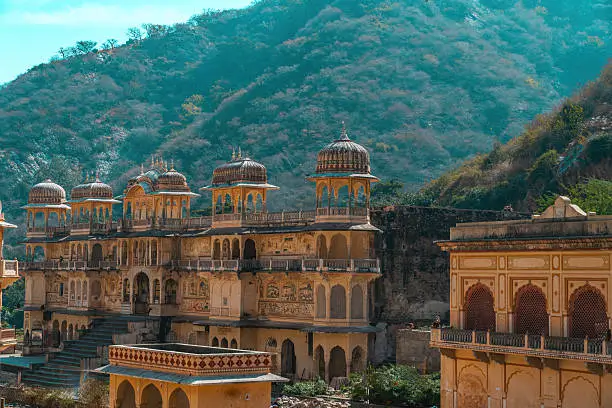
Galta Ji Temple is known for its pink sandstone buildings, decorative arches, carved pillars, courtyards, and sacred water tanks. Instead of standing as one single structure, the complex spreads through a natural opening between the surrounding hills.
Pink Sandstone Buildings
The warm-colored stone gives the buildings a distinctive appearance against the rocky hills. The structures have a palace-like character, with balconies, arched openings, and decorative details influenced by traditional Rajasthani architecture.
Arches, Pillars, and Chhatris
As you walk through the complex, look for carved pillars, arched entrances, and domed pavilions known as chhatris. These features create interesting views from different parts of the temple and are worth taking time to appreciate.
If you enjoy photography, these architectural details can make interesting subjects. Remember to follow the temple’s camera rules, particularly if you are carrying a DSLR, tripod, or other equipment.
Sacred Kunds and Water Channels
The water tanks are among the most recognizable features of Galta Ji. Natural spring water flows through channels into the kunds, which are surrounded by stone steps and bathing areas.
A carved stone feature shaped like a cow’s mouth, known as a gaumukh, is another distinctive part of the water system. The kunds are not merely decorative pools; they are important to the religious life of the temple.
Frescoes and Painted Walls
Some areas of the complex feature traditional wall paintings and decorative artwork. The Indira Gandhi National Centre for the Arts (IGNCA) documents a temple room at Galta Ji containing fresco paintings dating to the late 18th century. The record describes six composite panels associated with the Ragamala painting tradition.
These paintings add to the site’s artistic and historical importance. Their condition varies, so take time to observe the details without touching the painted surfaces.
Temples and Hilltop Views
The wider complex contains several shrines, including Ramgopalji Temple and Sitaram Ji Temple. Surya Mandir, also known as the Sun Temple, stands on the ridge above the main complex and is known for its views across Jaipur.
The combination of architecture, water features, and surrounding hills makes Galta Ji particularly interesting for visitors who enjoy heritage sites.
What to Expect When Visiting Galta Ji Temple
A visit to Galta Ji is different from visiting a museum or a ticketed monument. It is an active religious complex where worship, pilgrimage, and sightseeing take place together.
A Living Place of Worship
You may see priests performing rituals, devotees offering prayers, and people visiting the sacred kunds. Keep your voice low around worship areas, dress respectfully, and follow instructions from temple staff.
Some parts of the complex may have separate entry and photography rules. Do not assume that permission to take pictures outside also allows photography inside every shrine.
Monkeys Around the Temple
Monkeys are one of the main reasons the site is popularly called the Monkey Temple. They can be seen on steps, rooftops, walls, and near the water tanks.
Keep food, sunglasses, phones, and other loose belongings secure. Do not tease or feed the monkeys, and avoid approaching them for close-up photographs. Keep your belongings secure. If a monkey comes near you, remain calm and move away slowly without provoking it.
Walking, Steps, and Uneven Paths
Expect to walk through courtyards, along stone paths, and up and down steps. Some surfaces can be uneven, and the route to Surya Mandir involves an uphill climb.
Wear comfortable footwear with a good grip. During the monsoon, take extra care because wet stone steps may become slippery.
Bathing Areas and Religious Customs
Pilgrims may bathe in the sacred kunds. Visitors who do not wish to participate can observe from suitable areas while respecting the privacy of people taking part in religious activities.
Do not jump into the pools or climb over barriers. Follow local instructions and avoid disturbing worshippers.
Heat, Crowds, and Facilities
The hillside setting can feel hot during summer, particularly around midday. Carry drinking water, wear suitable clothing, and allow enough time to explore without rushing.
Crowds can increase during festivals and religious occasions. Check the published opening hours before setting out, as the temple website lists different timings for different days of the week.
Places to See Inside Galta Ji Temple
Allow enough time to explore the complex rather than stopping only at the entrance.
Galta Kund: The best-known sacred water tank, surrounded by steps and ghats. Observe religious activities respectfully.
Ramgopalji Temple and Galwar Bagh: An area associated with the temple’s Monkey Temple identity, where monkeys are frequently seen.
Shrines and courtyards: Explore the temple buildings and their architectural details while following any restrictions on entry or photography.
Surya Mandir (Sun Temple): Located on the ridge above the main complex, this temple is known for its views across Jaipur. The uphill walk requires suitable footwear and enough daylight to return safely.
How to Reach Galta Ji Temple
Galta Ji Temple is located on the eastern side of Jaipur, among the Aravalli hills.
- By cab: Search for Galta Ji Temple in your navigation app and check the route from your starting point.
- By auto-rickshaw: Agree on the fare before beginning your journey, especially if the driver will wait for you.
- By two-wheeler: Check where parking is permitted near the entrance.
- From Jaipur Airport or railway station: A cab is a convenient option, but travel time depends on traffic and the route.
Use Google Maps directions to Galta Ji Temple to plan your journey.
Parking Near Galta Ji Temple
Parking arrangements near the temple can vary with visitor numbers and local conditions. Space may be limited on busy days and during festivals.
Ask the parking attendant about the charge before leaving your vehicle. Keep helmets, sunglasses, food, and other belongings secure because monkeys may grab unattended items.
If you are visiting mainly for darshan or photography with a phone, taking a cab or auto-rickshaw can be more convenient than searching for a parking space.
Best Season to Visit Galta Ji Temple
October to March is generally a comfortable period to explore the temple and surrounding hills.
| Season | What to expect |
| October to March | Generally pleasant weather for sightseeing |
| April to June | Hot conditions: an early visit is preferable when the temple is open. |
| July to September | Green surroundings, but paths may become slippery |
| Makar Sankranti | A major pilgrimage period that can attract large crowds |
If you are planning a photography visit, check both the opening hours and the camera rules for your chosen day. Do not assume that the complex is open every day, as the temple website’s displayed contact information lists Sunday as closed.
Important Tips Before Visiting
- Check the website’s listed timings before setting out.
- Keep your camera ticket with you if you pay for photography.
- Ask about equipment restrictions before bringing a DSLR, tripod, or attachments.
- Obtain permission before planning a professional photoshoot or video production.
- Wear comfortable footwear for uneven paths and steps.
- Dress respectfully because this is an active religious site.
- Do not feed or tease the monkeys, and keep your phone and sunglasses secure.
- Ask for clarification if you are uncertain about a requested payment.
- Confirm parking and professional-shoot charges directly because the published chart does not list every possible expense.
Frequently Asked Questions
Why is Galta Ji Temple called the Monkey Temple?
The temple is popularly called the Monkey Temple because large groups of monkeys live around its buildings, steps, and water tanks. Their regular presence has become one of the site’s best-known features.
Who is Saint Galav, and why is he associated with the temple?
Saint Galav is a sage associated with the site through religious tradition. He is believed to have meditated and performed penance in the area, which became an important place of worship.
What is special about Galta Kund?
Galta Kund is the most revered of the temple complex’s sacred water tanks. It is traditionally believed never to run dry and attracts pilgrims who come for religious rituals and holy bathing.
Is Galta Ji Temple suitable for children and older visitors?
Families can visit, but the complex has uneven paths and steps. Anyone who has difficulty walking should plan carefully, wear suitable footwear, and avoid the hilltop climb if it feels unsafe.
Can I visit Galta Ji Temple and Surya Mandir on the same trip?
Yes, you can plan both during the same visit if the temple is open and you have enough time. Allow extra time for the uphill walk and return before dark.
Do I need to book a visit in advance?
The published information reviewed does not establish a general advance-booking requirement for ordinary darshan. Professional photography and videography are different and require prior permission under the website’s notice.
Is Galta Ji Temple a good place for architecture photography?
The sandstone buildings, arches, painted surfaces, and water tanks offer interesting architectural subjects. Check the camera rules first, particularly if you plan to use equipment beyond a single cellphone or compact still camera.
Is the water in Galta Kund safe for swimming?
The kunds are sacred water tanks used for religious bathing, not designated swimming pools. Follow local instructions and do not jump into the water or treat the tanks as recreational swimming facilities.
What should I carry for a visit?
Carry drinking water, comfortable footwear, and only the belongings you need. Keep food and loose items secure around monkeys, and check whether your camera equipment requires permission.
Where can I confirm photography rules before visiting?
Start with galtaji.org. For professional photography, videography, or equipment not covered by the standard camera ticket, contact the temple authority and obtain clarification before travelling.
Final Thoughts
Galta Ji Temple is a good place to experience Jaipur’s spiritual side while exploring its historic architecture and peaceful hill surroundings. Whether you are visiting for darshan, heritage photography, or a short trip away from the busy city, planning can make your visit more comfortable.
Before leaving, check the latest visitor rules and photography permissions on the official website, as timings and charges may change.
Planning a temple trip across the city? Read our visitor guides to Birla Mandir, Kale Hanuman Ji and Akshardham Temple to plan your timings.
Hungry after the visit? See our list of the best restaurants in Jaipur or try the city’s famous Jaipur street food.
Sources
- Galta Ji Temple website—Published admission and camera charge chart, contact information, and displayed weekly timings.
- Incredible India — Galta Ji Temple—Temple background, sacred kunds, natural springs, and religious significance.
- Jaipur Tourism—Galtaji Temple—History, architecture, and visitor information.
- IGNCA — Temple Containing Fresco Paintings, Galtaji, Jaipur—Heritage documentation of the temple room and its late 18th-century fresco paintings.
- Rajasthan Tourism—Jaipur—General information about Galta Ji, its shrines, kunds, and Sun Temple.